When you need damp treated
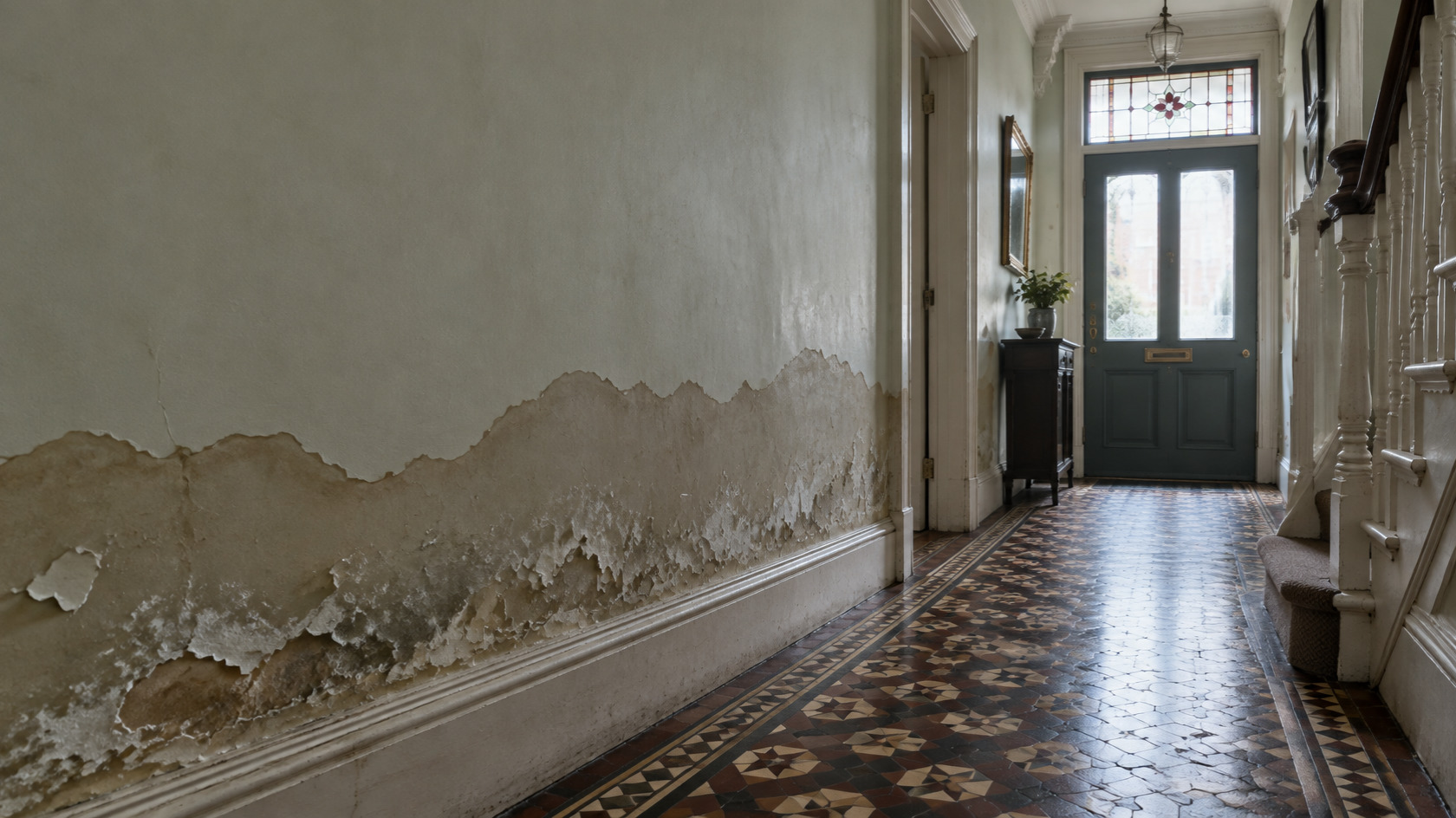
- Tide-marks and salts low on ground-floor walls
- Peeling paint or crumbling plaster near floor level
- Musty smells in ground-floor rooms
- Walls that are above the ground outside (below ground needs waterproofing)
4.5 from 43 Google reviews
Book a survey- Est. 1978Specialist waterproofing in London
- £10mProfessional indemnity insurance
- 10-yearRenlon guarantee on qualifying works
- CSSW · CSRTCertified surveyors on every survey
Clients and manufacturers
Clients

 Richardsons Nyewood






 Richardsons NyewoodRichardsons NyewoodRichardsons Nyewood
Approved by manufacturers





What rising damp looks like
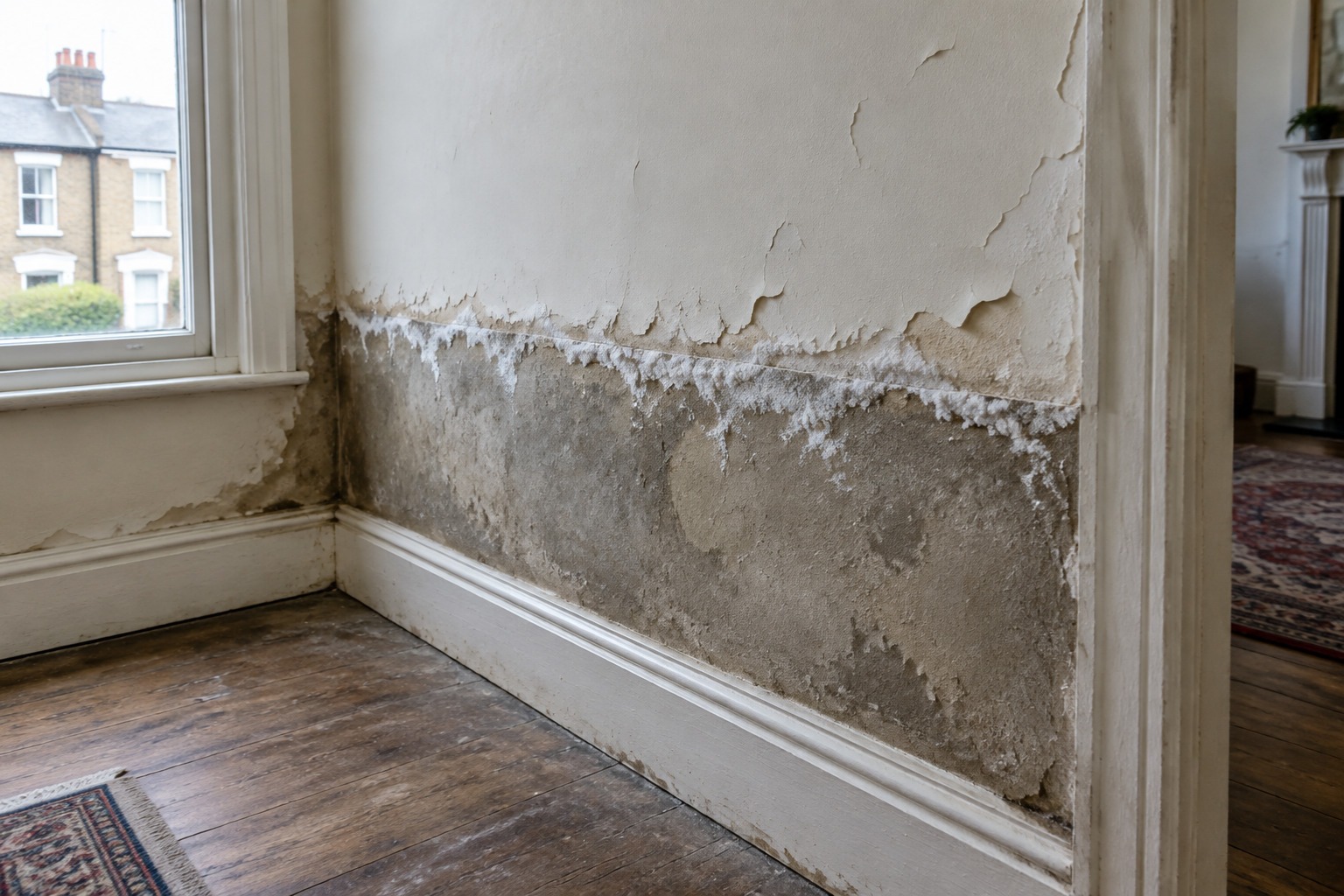
Rising damp is water drawn up through brickwork and mortar joints by capillary action. It typically shows as tide-marks at the base of walls.
It also leaves hygroscopic salts in the plaster, which attract further moisture from the air, so the wall stays damp even in dry weather. Not every damp wall is rising damp, which is why the diagnosis comes first.
Rising damp, condensation or a leak?
Three problems that look alike and need different fixes. These are the signs our surveyors look for.
| Rising damp | Condensation | Penetrating damp or a leak | |
|---|---|---|---|
| Where it shows | Low on ground-floor walls, often up to around a metre. | Corners, behind furniture, around windows and on cold walls. | Patches that line up with a gutter, downpipe, roof, window or pipe. |
| What you see | A tide-mark, salts on the plaster, peeling paint and crumbling plaster. | Black mould, and water running down the inside of windows. | A damp patch that matches its source. |
| When it is worst | All year. The salts keep the wall damp even in dry weather. | In winter, in bathrooms, kitchens and bedrooms. | After heavy rain. |
| What fixes it | A damp-proof course, with salt-contaminated plaster replaced where needed. | Better ventilation and heating. It is usually not a building defect. | Repairing the source first: the gutter, pipe, roof or window. |
Rising damp
- Where it shows
- Low on ground-floor walls, often up to around a metre.
- What you see
- A tide-mark, salts on the plaster, peeling paint and crumbling plaster.
- When it is worst
- All year. The salts keep the wall damp even in dry weather.
- What fixes it
- A damp-proof course, with salt-contaminated plaster replaced where needed.
Condensation
- Where it shows
- Corners, behind furniture, around windows and on cold walls.
- What you see
- Black mould, and water running down the inside of windows.
- When it is worst
- In winter, in bathrooms, kitchens and bedrooms.
- What fixes it
- Better ventilation and heating. It is usually not a building defect.
Penetrating damp or a leak
- Where it shows
- Patches that line up with a gutter, downpipe, roof, window or pipe.
- What you see
- A damp patch that matches its source.
- When it is worst
- After heavy rain.
- What fixes it
- Repairing the source first: the gutter, pipe, roof or window.
These are pointers, not a diagnosis. A qualified surveyor tests the building before recommending any work.Read the full guide
We design it. We install it. We guarantee it.
Water drawn up through brickwork by capillary action, diagnosed by qualified surveyors and treated properly, so you only pay for what the wall needs.
Survey
A surveyor certified in remedial treatments tests the walls and finds the real cause of the damp.
Report
You get a clear written report and quotation before any work is agreed.
Treatment
A damp-proof course installed by our own teams, with salt-contaminated plaster replaced where needed.
Guarantee
Qualifying works are covered by Renlon’s own guarantee.
One accountable team since 1978
Our surveyors are certified in structural waterproofing and remedial treatments, our own teams do the work, and qualifying works carry Renlon’s own 10-year guarantee.
See our projects“Very helpful engineers on site, who did a great job at explaining exactly the course of action they were taking. Highly recommended.”
Related services
- Woodworm & Timber TreatmentDiagnosing and breaking the woodworm life cycle, and treating wet and dry rot, so floors, joists and roof timbers stay sound.
- Basement & Structural WaterproofingSurvey, BS 8102:2022 design and installation of Type A barrier and Type C cavity drain systems, from one accountable team with £10m PI cover and our own 10-year guarantee.
- Type A Barrier Protection (Tanking)A waterproof barrier bonded to the walls, floor and soffit that holds water back at the surface. Designed to BS 8102:2022 and installed by our own teams.
Rising Damp & Damp-Proof Courses: questions
Quick answers from our surveyors. Still stuck? Email survey@renlon.com and a qualified surveyor replies.
Is it rising damp or condensation?
Condensation usually shows as mould in corners, on cold walls and on streaming windows. Rising damp leaves tide-marks and salts low on the wall. Our surveyor tests the walls and tells you which before recommending anything.
Do I need damp proofing or waterproofing?
If the floor inside is lower than the ground outside, the wall is holding back soil and water and needs waterproofing to BS 8102. If not, it is usually a damp-proofing job.
What causes the tide-marks?
As water rises through the wall and evaporates, it leaves salts behind in the plaster. Those salts mark the wall and attract more moisture from the air, which is why the plaster often needs replacing too.
Will I need new plaster?
Often, yes. Salt-contaminated plaster keeps drawing moisture even after a damp-proof course is in, so our teams replace it where needed as part of the treatment.
What is a damp-proof course?
A barrier in the base of a wall that stops moisture from the ground rising through the brickwork. Older buildings may have none, and an existing one can fail or be bridged, for example by raised ground or render outside.
How do your surveyors confirm it is rising damp?
A surveyor certified in remedial treatments inspects and tests the walls and looks for other sources of moisture first, because not every damp wall is rising damp. You get the findings in a written report before any work is agreed.
Can we stay in the house during the work?
Usually, yes. We protect the rest of your home and keep the work area tidy.
Is damp-proofing work guaranteed?
Qualifying damp-proofing works are covered by Renlon’s own 10-year guarantee. The exact scope for your job is set out in your guarantee documents.